




How does 3D printing impact the development of auto parts precision die casting?
 Nov 27, 2025|
 In the ever - evolving landscape of the automotive industry, both 3D printing and auto parts precision die casting play pivotal roles. As a long - standing auto parts precision die casting supplier, I've witnessed firsthand the significant changes and impacts that 3D printing has brought to our field.
1. Understanding Auto Parts Precision Die Casting
Auto parts precision die casting is a manufacturing process that involves forcing molten metal under high pressure into a die cavity. This process is highly efficient for mass - producing complex auto parts with high dimensional accuracy and smooth surfaces. It is widely used for manufacturing engine components, transmission parts, and structural elements in vehicles.
We, as a supplier, have been relying on traditional die - casting methods for years. These methods have proven to be reliable for large - scale production. For instance, when producing Aluminum Alloy Auto Parts Precision Die Casting [/die - casting/die - casting - automotive - parts/aluminum - alloy - auto - parts - precision - die.html], we can achieve high - volume output with consistent quality. The dies used in this process are usually made of steel and can withstand the high pressure and temperature during the casting process. However, the traditional die - casting process also has its limitations. The cost of creating dies is extremely high, especially for complex parts. A single die can cost thousands or even tens of thousands of dollars, depending on its complexity. And the lead time for die manufacturing can be several weeks or even months, which is a significant drawback when it comes to rapid prototyping or small - batch production.
2. An Overview of 3D Printing
3D printing, also known as additive manufacturing, is a process of creating three - dimensional objects by adding material layer by layer. There are several types of 3D printing technologies, including Fused Deposition Modeling (FDM), Stereolithography (SLA), and Selective Laser Sintering (SLS).
One of the most significant advantages of 3D printing is its ability to create highly complex geometries that are difficult or impossible to achieve with traditional manufacturing methods. It also offers rapid prototyping capabilities. A 3D model can be designed on a computer and printed within hours or days, depending on the size and complexity of the object. This speed is invaluable in the automotive industry, where rapid product development can give companies a competitive edge.
3. Impact on Design and Prototyping
3.1 Accelerated Design Iteration
3D printing has revolutionized the design and prototyping phase of auto parts precision die casting. In the past, when designing a new auto part, we had to go through a long and costly process of creating a die for each design iteration. With 3D printing, we can quickly print out a physical model of the part based on the digital design. This allows designers to test the form, fit, and function of the part in a real - world environment much earlier in the development process.
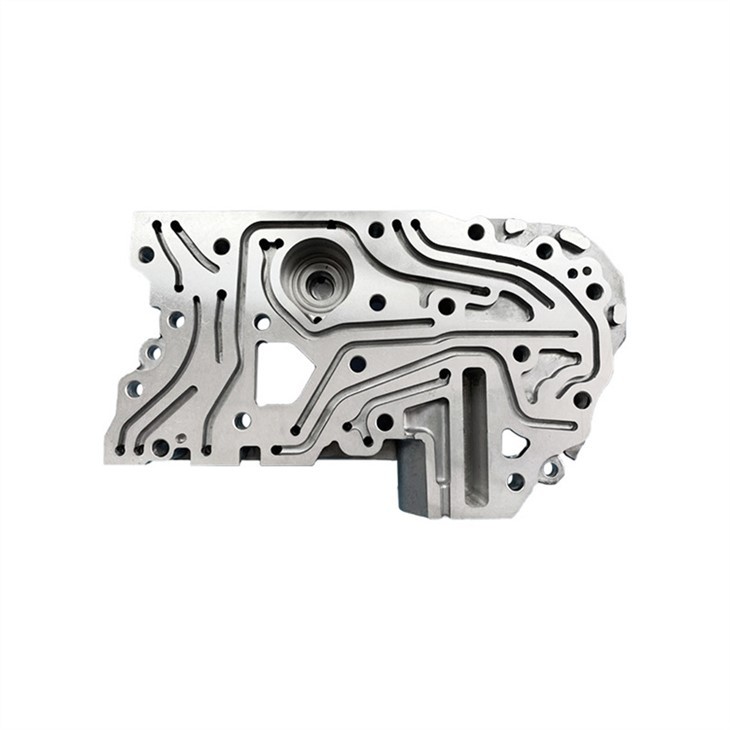
For example, if we are designing a new Aluminum Alloy Auto Parts Die - Casting Processing [/die - casting/die - casting - automotive - parts/aluminum - alloy - auto - parts - die - castings.html], we can print a prototype in a matter of hours. Designers can then hold the prototype in their hands, check its dimensions, and even perform some basic tests. If any design changes are needed, they can be made in the digital model and a new prototype can be printed immediately. This iterative process significantly reduces the time and cost associated with traditional prototyping methods.
3.2 Design Freedom
3D printing also offers unparalleled design freedom. Traditional die - casting methods are often limited by the complexity of the die and the flow of molten metal. With 3D printing, we can create parts with internal channels, lattice structures, and organic shapes that were previously impossible to manufacture. This design freedom allows for the development of lighter, stronger, and more efficient auto parts. For instance, we can design parts with optimized internal structures to reduce weight without sacrificing strength, which is crucial for improving fuel efficiency in vehicles.
4. Impact on Small - Batch Production
4.1 Cost - Effective Small - Batch Production
For small - batch production, 3D printing has become a game - changer. As mentioned earlier, the high cost of die manufacturing in traditional die casting makes small - batch production economically unfeasible. In contrast, 3D printing eliminates the need for expensive dies. Each part is printed individually, so the cost per part remains relatively constant regardless of the batch size.
This is particularly beneficial for producing rare or custom - made auto parts. For example, if a customer requests a small number of specialized auto parts for a classic car restoration project, 3D printing can provide a cost - effective solution. We can directly print these parts without having to invest in expensive die manufacturing. Auto Parts Precision Die Casting Processing [/die - casting/die - casting - automotive - parts/auto - parts - precision - die - casting - processing.html] can also be combined with 3D printing for small - batch production. We can use 3D - printed patterns to create molds for die casting, which reduces the lead time and cost compared to traditional mold - making methods.
4.2 Quick Response to Market Demand
In addition to cost savings, 3D printing enables us to respond quickly to market demand. In the automotive industry, market trends can change rapidly, and customers may have urgent needs for new or modified parts. With 3D printing, we can quickly adapt to these changes. We can design and print new parts within a short period, allowing us to meet the market demand in a timely manner.
5. Impact on Tooling and Manufacturing Process
5.1 3D - Printed Tooling
3D printing is also being used to create tooling for the die - casting process. Traditional tooling, such as dies and molds, is usually made of steel through machining processes, which are time - consuming and expensive. 3D - printed tooling offers a more cost - effective and faster alternative.
We can use 3D printing to create patterns for sand casting or investment casting, which are used to make molds for die casting. These 3D - printed patterns can be produced in a fraction of the time it takes to machine a traditional steel die. They can also be easily modified if design changes are required. Additionally, 3D - printed tooling can have complex internal structures that can improve the cooling and venting during the die - casting process, resulting in better - quality parts.
5.2 Hybrid Manufacturing
The combination of 3D printing and traditional die casting, known as hybrid manufacturing, is becoming increasingly popular. In hybrid manufacturing, 3D printing can be used to create pre - forms or inserts for die - cast parts. These pre - forms can be made of materials with different properties, such as high - strength polymers or ceramics, and then integrated into the die - casting process. This allows for the production of parts with enhanced performance and functionality.
6. Challenges and Limitations
Despite the many benefits, there are also some challenges and limitations when it comes to integrating 3D printing into auto parts precision die casting.
6.1 Material Limitations
The materials used in 3D printing may not always meet the strict requirements of the automotive industry. For example, the mechanical properties of 3D - printed parts, such as strength, hardness, and fatigue resistance, may be inferior to those of die - cast parts. Although there are continuous advancements in 3D - printing materials, there is still a long way to go before they can fully replace traditional die - casting materials.
6.2 Surface Finish and Dimensional Accuracy
The surface finish and dimensional accuracy of 3D - printed parts may not be as high as those of die - cast parts. In the automotive industry, parts often require a high level of surface smoothness and precise dimensions to ensure proper fit and function. Post - processing operations, such as machining and polishing, are usually required for 3D - printed parts, which can increase the cost and lead time.
7. Conclusion and Call to Action
In conclusion, 3D printing has had a profound impact on the development of auto parts precision die casting. It has revolutionized the design and prototyping process, enabled cost - effective small - batch production, and introduced new possibilities in tooling and manufacturing. However, there are still challenges that need to be addressed, such as material limitations and surface finish issues.
As an auto parts precision die casting supplier, we are constantly exploring the potential of 3D printing and integrating it into our manufacturing processes. We believe that by combining the advantages of 3D printing and traditional die casting, we can provide our customers with high - quality, cost - effective, and innovative auto parts.
If you are interested in our auto parts precision die casting services or want to learn more about how 3D printing can benefit your automotive projects, we invite you to contact us for a procurement discussion. We are eager to work with you to meet your specific needs and drive the future of the automotive industry.
References
- Gibson, I., Rosen, D. W., & Stucker, B. (2010). Additive Manufacturing Technologies: Rapid Prototyping to Direct Digital Manufacturing. Springer.
- Campbell, I. M., Bourell, D., & Gibson, I. (2012). Rapid Prototyping and Manufacturing: Fundamentals of Stereolithography. Society of Manufacturing Engineers.
- Wohlers, T., & Gornet, P. (2018). Wohlers Report 2018: 3D Printing and Additive Manufacturing State of the Industry. Wohlers Associates.