




How to ensure the perpendicularity of die - cast valve parts?
 Dec 26, 2025|
 In the realm of manufacturing, ensuring the perpendicularity of die - cast valve parts is of utmost importance. As a dedicated valve parts die casting supplier, I understand the critical role that perpendicularity plays in the functionality, performance, and overall quality of these parts. In this blog, I will delve into the various aspects of how to ensure the perpendicularity of die - cast valve parts.
Understanding the Significance of Perpendicularity in Valve Parts
Valve parts are essential components in many industrial systems, including plumbing, automotive, and aerospace applications. The perpendicularity of these parts directly affects their fit, seal, and operation. For instance, in a plumbing valve, if the valve stem is not perpendicular to the valve body, it can lead to leaks, reduced flow control, and premature wear. In an automotive engine valve, improper perpendicularity can cause inefficient combustion, power loss, and increased emissions. Therefore, maintaining the correct perpendicularity is crucial for the proper functioning and longevity of the valve systems.
Factors Affecting the Perpendicularity of Die - Cast Valve Parts
Die Design
The die design is the first and most fundamental factor influencing the perpendicularity of die - cast valve parts. A well - designed die should have precise alignment and proper support structures. The parting line of the die, which is the interface between the two halves of the die, must be accurately machined and aligned. Any misalignment in the parting line can result in uneven forces during the casting process, leading to distorted parts with poor perpendicularity.
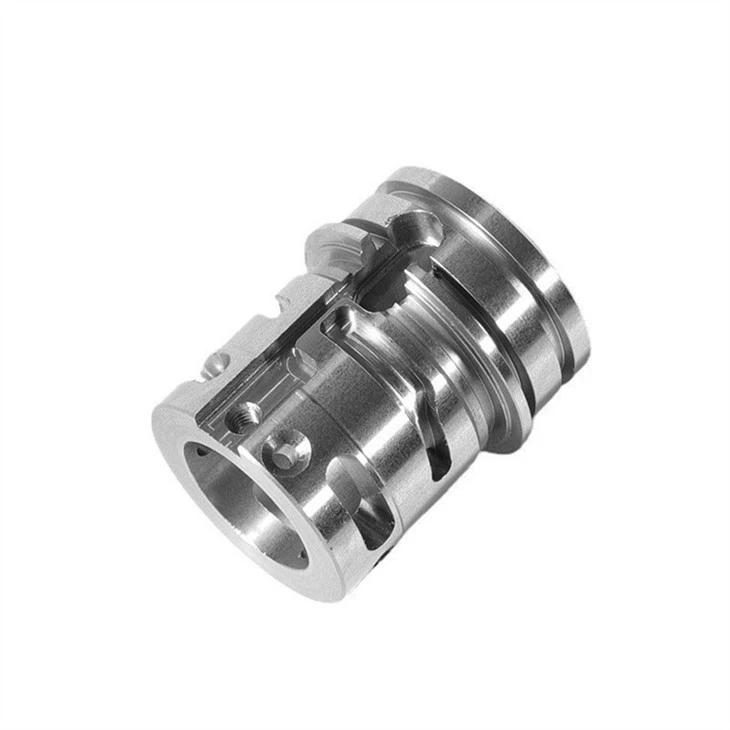

Moreover, the cavity and core of the die should be designed to ensure uniform metal flow. If the metal flow is uneven, it can cause differential shrinkage and warping of the part, affecting its perpendicularity. For example, if the gate location in the die is not optimized, the molten metal may enter the cavity in an unbalanced manner, causing the part to deform.
Die - Casting Process Parameters
The die - casting process parameters, such as injection speed, pressure, and temperature, also have a significant impact on the perpendicularity of the parts. High injection speed can cause turbulence in the molten metal, leading to air entrapment and uneven filling of the die cavity. This can result in internal stresses and distortion of the part, affecting its perpendicularity.
On the other hand, improper pressure can cause the part to be under - or over - packed. An under - packed part may have incomplete filling and poor dimensional accuracy, while an over - packed part can experience excessive forces that may deform the part. Temperature is another critical parameter. If the die temperature is too high or too low, it can affect the solidification rate of the molten metal, leading to differential shrinkage and warping of the part.
Material Properties
The properties of the die - casting material, such as its thermal expansion coefficient and fluidity, can also influence the perpendicularity of the parts. Materials with high thermal expansion coefficients are more likely to experience significant dimensional changes during the cooling process, which can lead to warping and poor perpendicularity.
Fluidity is also important. If the material has poor fluidity, it may not fill the die cavity uniformly, resulting in incomplete parts or parts with internal defects that can affect their perpendicularity. For example, some alloys may have a tendency to form oxide films on the surface during the casting process, which can interfere with the metal flow and cause defects.
Methods to Ensure the Perpendicularity of Die - Cast Valve Parts
Precision Die Manufacturing
To ensure the perpendicularity of die - cast valve parts, precision die manufacturing is essential. Advanced machining techniques, such as computer numerical control (CNC) machining, should be used to fabricate the die. CNC machining offers high accuracy and repeatability, allowing for the precise machining of the die cavity, core, and parting line.
The die should also be made from high - quality materials with good dimensional stability. Heat treatment processes can be applied to the die to improve its hardness and wear resistance, ensuring its long - term accuracy. Regular inspection and maintenance of the die are also necessary to detect and correct any signs of wear or damage that may affect the perpendicularity of the parts.
Optimization of Die - Casting Process Parameters
The die - casting process parameters should be carefully optimized to ensure the perpendicularity of the parts. This can be achieved through a combination of experimental trials and simulation techniques. Experimental trials involve casting a series of test parts under different process conditions and measuring their perpendicularity. By analyzing the results, the optimal process parameters can be determined.
Simulation software can also be used to predict the metal flow, solidification, and stress distribution during the die - casting process. This allows for the identification of potential problems and the optimization of the process parameters before actual production. For example, simulation can help determine the best gate location, injection speed, and pressure to ensure uniform filling and minimal distortion of the part.
In - Process Quality Control
In - process quality control is crucial for ensuring the perpendicularity of die - cast valve parts. Non - destructive testing methods, such as ultrasonic testing and X - ray inspection, can be used to detect internal defects in the parts during the casting process. These defects, if not detected early, can lead to poor perpendicularity and other quality issues.
Dimensional inspection should also be carried out at various stages of the production process. Coordinate measuring machines (CMMs) can be used to accurately measure the perpendicularity of the parts. If any deviation from the specified tolerance is detected, corrective actions can be taken immediately, such as adjusting the process parameters or repairing the die.
Quality Assurance and Continuous Improvement
As a valve parts die casting supplier, we are committed to providing high - quality products with excellent perpendicularity. We have established a comprehensive quality assurance system that includes strict incoming material inspection, in - process quality control, and final product inspection.
We also believe in continuous improvement. By collecting and analyzing production data, we can identify areas for improvement and implement corrective and preventive actions. For example, if we notice a trend of poor perpendicularity in a particular batch of parts, we can investigate the root cause, such as a worn - out die or incorrect process parameters, and take appropriate measures to prevent it from happening again.
Conclusion
Ensuring the perpendicularity of die - cast valve parts is a complex but essential task. By focusing on die design, die - casting process parameters, material properties, and quality control, we can produce high - quality valve parts that meet the strictest industry standards. As a valve parts die casting supplier, we are dedicated to providing our customers with reliable and precise valve parts.
If you are interested in Valve Parts Die Casting, we also offer Home Appliance Parts Die - Casting Processing and Security Accessories Die Casting Processing. We welcome you to contact us for procurement negotiations to discuss your specific requirements and find the best solutions for your projects.
References
- Campbell, J. (2003). Casting. Butterworth - Heinemann.
- Flemings, M. C. (1974). Solidification Processing. McGraw - Hill.
- Kalpakjian, S., & Schmid, S. R. (2010). Manufacturing Engineering and Technology. Pearson.