




What are the effects of temperature on die casting mold parts?
 Dec 25, 2025|
 As a dedicated supplier of Die Casting Mold Parts, I've witnessed firsthand the profound impact that temperature can have on these critical components. In the die casting industry, temperature is not just a number; it's a fundamental factor that can determine the quality, durability, and performance of die casting mold parts. In this blog, I'll delve into the various effects of temperature on die casting mold parts, exploring both the positive and negative aspects and offering insights based on my years of experience in the field.
Thermal Expansion and Contraction
One of the most obvious effects of temperature on die casting mold parts is thermal expansion and contraction. As the temperature rises, the metal in the mold parts expands, and as it cools, it contracts. This natural phenomenon can have significant implications for the dimensional accuracy and fit of the mold parts.
During the die casting process, the mold is subjected to extreme temperature changes. When the molten metal is injected into the mold cavity, the temperature of the mold surface can increase rapidly. This sudden increase in temperature causes the mold material to expand, which can lead to dimensional changes in the mold cavity. If these changes are not accounted for in the design and manufacturing process, they can result in parts with incorrect dimensions or poor surface finish.
Conversely, when the casting cools and solidifies, the mold temperature decreases, causing the mold material to contract. This contraction can also affect the dimensional accuracy of the parts, especially if the cooling rate is not uniform. Uneven cooling can lead to internal stresses in the mold, which can cause warping or cracking over time.
To mitigate the effects of thermal expansion and contraction, it's essential to carefully control the temperature of the mold during the die casting process. This can be achieved through the use of cooling channels in the mold, which help to regulate the temperature and prevent excessive expansion or contraction. Additionally, the mold design should take into account the thermal properties of the mold material and the expected temperature changes during the casting process to ensure that the parts are produced with the desired dimensional accuracy.
Wear and Tear
Another significant effect of temperature on die casting mold parts is wear and tear. The high temperatures and pressures involved in the die casting process can cause significant stress on the mold surface, leading to abrasion, erosion, and corrosion.
At elevated temperatures, the molten metal can react with the mold material, causing chemical corrosion. This corrosion can weaken the mold surface and make it more susceptible to wear and tear. Additionally, the high velocities of the molten metal as it is injected into the mold cavity can cause erosion, which can gradually wear away the mold surface over time.
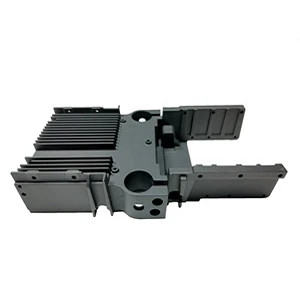

Abrasion is another common form of wear that can occur in die casting mold parts. As the casting is ejected from the mold, the surface of the mold can come into contact with the part, causing friction and abrasion. This abrasion can damage the mold surface and reduce its lifespan.
To reduce the effects of wear and tear, it's important to use high-quality mold materials that are resistant to corrosion, erosion, and abrasion. Additionally, proper surface treatments and coatings can be applied to the mold surface to improve its hardness and wear resistance. Regular maintenance and inspection of the mold parts can also help to identify and address any signs of wear and tear before they become major issues.
Fatigue and Cracking
The repeated heating and cooling cycles that occur during the die casting process can also cause fatigue and cracking in the mold parts. Fatigue is a phenomenon that occurs when a material is subjected to repeated stress over time, causing it to weaken and eventually fail.
In die casting molds, fatigue can occur due to the thermal stresses generated by the temperature changes during the casting process. These thermal stresses can cause microcracks to form in the mold material, which can gradually grow and spread over time. If these cracks are not detected and repaired, they can eventually lead to catastrophic failure of the mold.
Cracking can also occur due to other factors, such as improper mold design, excessive casting pressure, or inadequate cooling. To prevent fatigue and cracking, it's important to use a mold design that minimizes thermal stresses and to ensure that the casting process is optimized to reduce the stress on the mold. Additionally, regular inspection and maintenance of the mold parts can help to detect and repair any cracks before they become a problem.
Impact on Casting Quality
The temperature of the die casting mold can also have a significant impact on the quality of the cast parts. The temperature of the mold surface affects the solidification rate of the molten metal, which in turn affects the microstructure and mechanical properties of the cast part.
If the mold temperature is too low, the molten metal may solidify too quickly, resulting in parts with a coarse microstructure and poor mechanical properties. On the other hand, if the mold temperature is too high, the molten metal may solidify too slowly, which can lead to porosity, shrinkage, and other defects in the cast part.
To ensure the highest quality cast parts, it's important to maintain the mold temperature within a specific range during the die casting process. This can be achieved through the use of temperature sensors and control systems, which allow for precise regulation of the mold temperature. Additionally, the casting process parameters, such as the injection speed and pressure, should be optimized to ensure that the molten metal fills the mold cavity evenly and solidifies at the desired rate.
The Role of Temperature in Die Cast Molding Process
Temperature plays a crucial role in every stage of the Die Cast Molding Process. From the initial heating of the mold to the final cooling of the cast part, temperature control is essential for achieving high-quality results.
During the preheating stage, the mold is heated to a specific temperature to ensure that the molten metal flows smoothly into the mold cavity. This preheating helps to reduce the temperature difference between the mold and the molten metal, which can prevent thermal shock and improve the filling of the mold.
Once the molten metal is injected into the mold cavity, the temperature of the mold surface increases rapidly. This increase in temperature is necessary to ensure that the metal solidifies properly and forms a high-quality casting. However, it's important to control the temperature rise to prevent excessive expansion or contraction of the mold.
After the casting has solidified, the mold temperature is gradually reduced to allow the part to cool and shrink uniformly. This cooling process is critical for preventing internal stresses and ensuring the dimensional accuracy of the part.
Importance of Precision Die Casting Mold Processing
In addition to temperature control, Precision Die Casting Mold Processing is also essential for producing high-quality die casting mold parts. Precision machining techniques, such as CNC machining and EDM, can ensure that the mold parts are manufactured with the highest level of accuracy and precision.
During the machining process, it's important to use the correct cutting tools and parameters to minimize the heat generated and prevent thermal damage to the mold material. Additionally, the surface finish of the mold parts can have a significant impact on the quality of the cast parts. A smooth surface finish can reduce friction and wear, improve the flow of the molten metal, and result in parts with better surface quality.
Conclusion
In conclusion, temperature has a profound impact on die casting mold parts, affecting their dimensional accuracy, wear and tear, fatigue and cracking, and the quality of the cast parts. As a supplier of Die Casting Mold Parts, I understand the importance of carefully controlling the temperature during the die casting process and using high-quality mold materials and precision machining techniques to ensure the longevity and performance of the mold parts.
If you're in the market for high-quality die casting mold parts, I encourage you to reach out to us for a consultation. Our team of experts has extensive experience in the die casting industry and can provide you with the solutions you need to meet your specific requirements. Whether you're looking for a single mold part or a complete die casting solution, we're here to help.
References
- Campbell, J. (2003). Castings. Butterworth-Heinemann.
- Dieter, G. E., & Schmidt, D. W. (2008). Mechanical Metallurgy. McGraw-Hill.
- Flemings, M. C. (1974). Solidification Processing. McGraw-Hill.