




What are the factors to consider when designing a precision die casting mould for complex - shaped parts?
 Apr 13, 2026|
 When it comes to designing a precision die casting mould for complex - shaped parts, as a precision die casting mould supplier, there are numerous factors that need to be carefully considered. This process is not only about creating a mould that can produce the desired part but also ensuring high - quality, efficient, and cost - effective production.
1. Part Design and Geometry
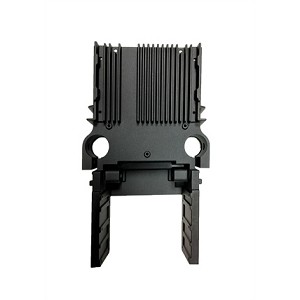
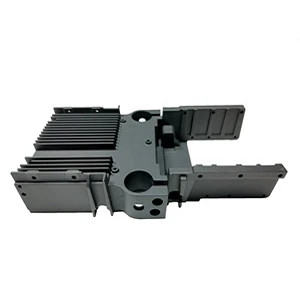
The first and most fundamental factor is the design and geometry of the complex - shaped part itself. Understanding the part's shape, size, and features is crucial. Complex geometries, such as undercuts, thin walls, and intricate details, can pose significant challenges in the die casting process.
Undercuts, for example, are areas of the part that prevent the part from being ejected from the mould in a straightforward manner. Special mechanisms, such as slides or lifters, need to be incorporated into the mould design to accommodate undercuts. These additional components increase the complexity of the mould but are necessary to produce parts with such features.
Thin - walled parts require careful consideration of the molten metal flow during the die casting process. If the walls are too thin, the metal may not fill the mould cavity properly, leading to defects such as incomplete filling or porosity. On the other hand, if the walls are too thick, it can result in longer cooling times and increased production costs.
The overall size of the part also matters. Larger parts may require larger moulds, which in turn need more robust structures to withstand the high pressures during the die casting process. Moreover, the size can affect the metal flow and cooling patterns, influencing the quality of the final product.
2. Material Selection
The choice of material for the die casting mould is another critical factor. The mould material must be able to withstand the high temperatures and pressures involved in the die casting process. Common materials for precision die casting moulds include tool steels, such as H13.
H13 steel is widely used due to its excellent combination of strength, toughness, and heat resistance. It can maintain its mechanical properties at high temperatures, which is essential for repeated use in the die casting process. The hardness of the material also affects the wear resistance of the mould. A harder material will be more resistant to wear and tear, resulting in a longer mould life.
However, material selection is not only about the physical properties but also about cost - effectiveness. Some high - performance materials may be very expensive, which can significantly increase the cost of the mould. Therefore, a balance needs to be struck between the required performance and the cost of the material.
3. Cooling System Design
An efficient cooling system is vital for the success of a precision die casting mould. The cooling system helps to control the temperature of the mould during the die casting process, ensuring consistent part quality and reducing cycle times.
The design of the cooling system should be tailored to the specific geometry of the part and the mould. Cooling channels need to be strategically placed to ensure uniform cooling of the mould. Uneven cooling can lead to thermal stresses, which may cause warping of the part or damage to the mould.
For complex - shaped parts, the cooling system may need to be more intricate. For example, conformal cooling channels can be used to follow the shape of the part more closely, providing more efficient cooling. These channels can be created using advanced manufacturing techniques such as 3D printing, which allows for greater flexibility in the design of the cooling system.
4. Ejection System
The ejection system is responsible for removing the cast part from the mould after the casting process is complete. For complex - shaped parts, a well - designed ejection system is essential to prevent damage to the part during ejection.
The number and placement of ejector pins need to be carefully considered. Ejector pins should be placed in areas where there is sufficient support to avoid deforming the part. In some cases, additional ejection mechanisms, such as stripper plates or sleeve ejectors, may be required for complex parts.
The ejection force also needs to be carefully calculated. If the ejection force is too high, it can damage the part or the mould. On the other hand, if the ejection force is too low, the part may not be ejected properly.
5. Gate and Runner Design
The gate and runner system is responsible for guiding the molten metal into the mould cavity. The design of the gate and runner has a significant impact on the quality of the cast part.
The gate size and shape need to be optimized to ensure proper filling of the mould cavity. A small gate may restrict the flow of the molten metal, leading to incomplete filling or cold shuts. A large gate, on the other hand, may cause excessive turbulence and air entrapment.
The runner system should be designed to minimize pressure drop and ensure uniform distribution of the molten metal. For complex - shaped parts, a well - designed runner system can help to fill all the intricate details of the part.
The location of the gate is also crucial. It should be placed in a position that allows for smooth filling of the mould cavity and minimizes the formation of defects. In some cases, multiple gates may be required for complex parts to ensure proper filling.
6. Surface Finish and Tolerances
The surface finish of the mould directly affects the surface quality of the cast part. For precision die casting of complex - shaped parts, a high - quality surface finish is often required. The mould surface can be polished to achieve a smooth finish, which can reduce friction during the ejection process and improve the appearance of the part.
Tolerances are also an important consideration. Complex - shaped parts may have tight tolerances, which require high - precision machining of the mould. The mould maker needs to ensure that the mould dimensions are within the specified tolerances to produce parts that meet the design requirements.
7. Manufacturing Process and Technology
The manufacturing process and technology used to produce the precision die casting mould can significantly affect its quality and performance. Advanced manufacturing techniques, such as CNC machining, EDM (Electrical Discharge Machining), and 3D printing, can be used to create complex moulds with high precision.
CNC machining allows for accurate and repeatable machining of the mould components. EDM is useful for creating complex shapes and features that are difficult to machine using traditional methods. 3D printing, on the other hand, offers greater design flexibility and can be used to create conformal cooling channels and other complex structures.
However, the choice of manufacturing process also depends on the cost and lead time. Some advanced manufacturing techniques may be more expensive and time - consuming, so a balance needs to be struck between the required precision and the cost - effectiveness of the manufacturing process.
8. Quality Control and Testing
Quality control and testing are essential steps in the design and production of precision die casting moulds. Before the mould is put into production, it should be thoroughly inspected to ensure that it meets all the design requirements.
Non - destructive testing methods, such as ultrasonic testing and X - ray inspection, can be used to detect any internal defects in the mould. Dimensional inspection using coordinate measuring machines (CMM) can ensure that the mould dimensions are within the specified tolerances.
Once the mould is in production, regular quality control checks should be carried out on the cast parts. This helps to identify any issues early and make necessary adjustments to the mould or the casting process.
Conclusion
Designing a precision die casting mould for complex - shaped parts is a complex and challenging task that requires careful consideration of multiple factors. From part design and material selection to cooling system design and quality control, each aspect plays a crucial role in the success of the die casting process.
As a precision die casting mould supplier, we have the expertise and experience to handle these challenges. We offer a wide range of Die Casting Mold Parts and use advanced Die Cast Molding Process and Precision Die Casting Mold Processing techniques to ensure high - quality moulds.
If you are in need of a precision die casting mould for complex - shaped parts, we invite you to contact us for a detailed discussion. Our team of experts will work closely with you to understand your requirements and provide the best solutions for your project.
References
- Campbell, J. (2003). Casting. Butterworth - Heinemann.
- Groover, M. P. (2010). Fundamentals of Modern Manufacturing: Materials, Processes, and Systems. Wiley.
- Kalpakjian, S., & Schmid, S. R. (2013). Manufacturing Engineering and Technology. Pearson.