




What are the secondary operations after die casting automotive parts?
 Dec 30, 2025|
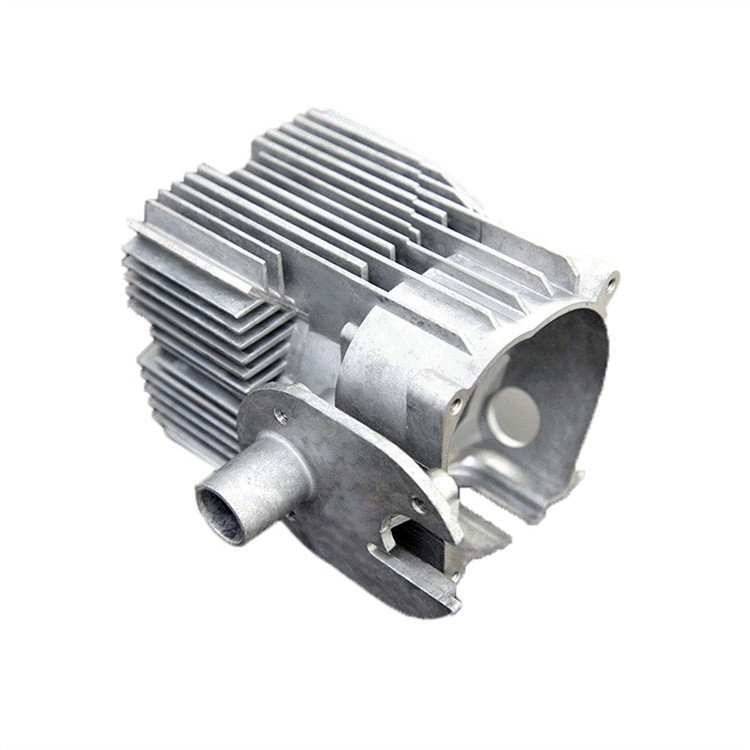
 After die casting automotive parts, a series of secondary operations are often required to ensure the parts meet the high - quality standards demanded by the automotive industry. As a die casting automotive parts supplier, I'd like to share some of the most common secondary operations that we perform on the die - cast automotive components.
Trimming and Deburring
The first step after die casting is usually trimming and deburring. During the die - casting process, excess material, known as flash, is often formed around the edges of the part. This flash is a result of molten metal seeping into the small gaps between the die halves. Trimming is the process of removing this excess material to achieve the correct shape and dimensions of the part.
Deburring, on the other hand, focuses on removing any sharp edges or burrs left on the part after trimming. These burrs can be a safety hazard during assembly and may also affect the fit and function of the part. We use a variety of tools for trimming and deburring, such as hydraulic presses for trimming large parts and hand - held files or abrasive wheels for deburring smaller, more intricate areas. For more information on our die - casting capabilities, you can visit Aluminum Alloy Auto Parts Die Casting.
Machining
Machining is another crucial secondary operation. While die casting can produce parts with relatively high precision, some features such as holes, threads, or complex surface finishes may require further machining. For example, a die - cast automotive engine block may need to have its cylinder bores machined to achieve the precise diameter and surface finish required for proper piston operation.
We use different machining processes, including milling, turning, and drilling. Milling is used to create flat surfaces, slots, or contours on the part. Turning is typically used to produce cylindrical features, such as shafts or the outer diameter of a pulley. Drilling is employed to create holes of various sizes. The choice of machining process depends on the specific requirements of the part. To learn more about our machining services for die - cast automotive parts, check out Auto Parts Precision Die Casting Processing.
Heat Treatment
Heat treatment is often applied to improve the mechanical properties of die - cast automotive parts. By subjecting the parts to specific heating and cooling cycles, we can enhance their strength, hardness, and toughness. For instance, in the case of aluminum die - cast parts, a solution heat treatment followed by aging can significantly increase their yield strength and tensile strength.
The heat treatment process involves heating the parts to a specific temperature, holding them at that temperature for a certain period, and then cooling them at a controlled rate. Different alloys and part geometries require different heat treatment parameters. Heat - treated parts are more resistant to wear, fatigue, and deformation, which is essential for automotive applications where parts are often subjected to high stress and harsh operating conditions. For details on our heat - treatment capabilities for aluminum alloy auto parts, visit Aluminum Alloy Auto Parts Die - Casting Processing.
Surface Finishing
Surface finishing is important not only for aesthetic reasons but also for protecting the parts from corrosion and wear. There are several surface - finishing methods available for die - cast automotive parts.
One common method is painting. Painting can provide a protective coating that prevents the part from rusting and also gives it a more appealing appearance. We use high - quality automotive paints that are resistant to chipping, fading, and environmental damage. Another surface - finishing option is powder coating. Powder coating offers a durable, uniform finish that is highly resistant to chemicals and abrasion.
Anodizing is a popular surface - finishing process for aluminum die - cast parts. It creates a hard, protective oxide layer on the surface of the aluminum, which enhances its corrosion resistance and can also be dyed to achieve different colors. Plating, such as chrome plating or nickel plating, can also be used to improve the wear resistance and appearance of the parts.
Quality Inspection
Quality inspection is an integral part of the secondary operations. After each secondary operation, the parts are thoroughly inspected to ensure they meet the required specifications. We use a combination of manual and automated inspection methods.
Manual inspection involves using tools such as calipers, micrometers, and gauges to measure the dimensions of the part. Visual inspection is also carried out to check for any surface defects, such as cracks, porosity, or uneven finishes. Automated inspection methods, such as coordinate measuring machines (CMMs), can provide highly accurate measurements of complex part geometries. Non - destructive testing methods, like ultrasonic testing or X - ray inspection, are used to detect internal defects that may not be visible on the surface.
Assembly
In some cases, the die - cast automotive parts need to be assembled into sub - assemblies or complete units. Assembly involves joining multiple parts together using various methods, such as welding, riveting, or using fasteners.
Welding can be used to join two or more die - cast parts permanently. Different welding processes, such as TIG (Tungsten Inert Gas) welding or MIG (Metal Inert Gas) welding, can be used depending on the material and the requirements of the joint. Riveting is a mechanical fastening method that is often used when a permanent but non - welded joint is required. Fasteners, such as bolts, nuts, and screws, are also commonly used for assembly.
Conclusion
As a die casting automotive parts supplier, we understand the importance of these secondary operations in delivering high - quality parts to our customers. Each secondary operation plays a vital role in ensuring that the die - cast automotive parts meet the strict quality, performance, and durability requirements of the automotive industry.
If you are in the market for high - quality die - cast automotive parts or have any specific requirements regarding secondary operations, we would be more than happy to discuss your needs. Contact us to start a procurement discussion and find out how our expertise in die casting and secondary operations can benefit your automotive projects.

References
- "Die Casting Handbook" by George E. Totten and Diran Apelian
- "Automotive Materials and Manufacturing Processes" by David Crolla
- Technical literature from leading die - casting equipment manufacturers