




What is the role of the slide block in a die casting mould?
 Jul 29, 2025|
Hey there! As a die casting mould supplier, I've been in the industry for quite some time, and I've seen firsthand how crucial every single part of a die casting mould is. Today, I wanna talk about one specific component that plays a super important role in the whole process: the slide block.
First off, let's quickly go over what die casting is. Die casting is a manufacturing process where molten metal is forced into a mould cavity under high pressure. This process is used to create complex and precise metal parts with high efficiency. You can learn more about the Die Cast Molding Process on our website.
Now, back to the slide block. A slide block in a die casting mould is like a little helper that allows the mould to create parts with undercuts or complex geometries. Undercuts are those areas on a part that prevent it from being ejected straight out of the mould. Without slide blocks, it would be really tough, if not impossible, to make parts with these kinds of features.
So, how does it work? When the die casting machine closes, the slide block moves into position to form part of the mould cavity. This means it helps shape the final product, filling in those tricky areas that a regular, straight - forward mould couldn't handle on its own. Once the molten metal has cooled and solidified into the desired part, the slide block retracts. This retraction allows the part to be ejected smoothly from the mould.
One of the key benefits of using slide blocks is the ability to create more complex and detailed parts. In today's market, there's a high demand for parts with unique shapes and features. For example, in the automotive industry, many engine components have undercuts and complex geometries to fit specific functions and spaces. With slide blocks, we can meet these demands and produce parts that are both functional and precise.
Another important aspect is the impact on production efficiency. Slide blocks are designed to move quickly and accurately. This means that the overall cycle time of the die casting process can be reduced. Faster cycle times translate to more parts being produced in a given period, which is great for both us as suppliers and our customers. It allows us to offer more competitive pricing and faster delivery times.
However, like any part of a die casting mould, slide blocks need to be well - maintained. They are subject to a lot of wear and tear due to the high pressures and temperatures involved in the die casting process. Regular maintenance, such as lubrication and inspection for damage, is essential to ensure they continue to function properly. If a slide block malfunctions, it can lead to defective parts, production delays, and increased costs.
When it comes to the design of slide blocks, there are several factors to consider. The material used is crucial. We usually choose materials that can withstand high temperatures and pressures, such as high - strength steels. The shape and size of the slide block also need to be carefully designed to fit the specific requirements of the part being produced.
The movement mechanism of the slide block is another important consideration. There are different types of movement mechanisms, such as hydraulic, mechanical, and pneumatic. Each has its own advantages and disadvantages. For example, hydraulic systems offer high force and precise control but can be more expensive and require more maintenance. Mechanical systems are simpler and more cost - effective but may not offer the same level of precision in some cases.
In addition to creating undercuts, slide blocks can also be used to create side holes or slots in parts. This adds even more versatility to the die casting process. For instance, in the electronics industry, many components need small side holes for wiring or ventilation. Slide blocks make it possible to create these features directly during the die casting process, eliminating the need for secondary machining operations.
Now, let's talk about the relationship between slide blocks and other die casting mould parts. Slide blocks work in conjunction with the core, cavity, and ejector pins. The core and cavity form the main shape of the part, while the slide block fills in the details. The ejector pins are responsible for pushing the part out of the mould once it's solidified. All these parts need to work in harmony to ensure a successful die casting operation. You can find more information about Die Casting Mold Parts on our site.

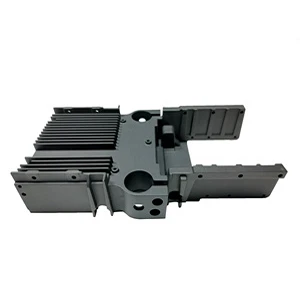
The precision of slide block movement is also closely related to the overall precision of the die casting mould. Any deviation in the movement of the slide block can lead to dimensional inaccuracies in the final part. That's why we pay a lot of attention to the manufacturing and assembly of slide blocks. We use Precision Die Casting Mold Processing techniques to ensure that every slide block meets the highest standards of accuracy.
As a die casting mould supplier, we understand the importance of providing our customers with high - quality slide blocks and the entire die casting mould system. We have a team of experienced engineers who are constantly working on improving the design and performance of slide blocks. We also invest in the latest technology and equipment to ensure that our manufacturing processes are as efficient and precise as possible.
If you're in the market for die casting moulds and are interested in learning more about how slide blocks can benefit your specific application, we'd love to hear from you. Whether you need parts with complex geometries or are looking to improve your production efficiency, we have the expertise and resources to help you. Reach out to us to start a conversation about your die casting needs. We're here to work with you to find the best solutions for your business.
In conclusion, slide blocks are an essential part of die casting moulds. They enable the production of complex parts, improve production efficiency, and add a lot of versatility to the die casting process. As a die casting mould supplier, we're committed to providing top - notch slide blocks and moulds to meet the diverse needs of our customers. So, if you're looking for a reliable partner for your die casting projects, don't hesitate to get in touch.
References
- Industry knowledge and experience gained over years of working in the die casting mould industry.
- Ongoing research and development in die casting technology and materials.