




What is the trimming process in the die cast molding process?
 Oct 31, 2025|
 In the realm of manufacturing, die cast molding stands as a cornerstone process, enabling the production of high - quality metal parts with precision and efficiency. As a trusted supplier in the die cast molding industry, I am often asked about the various steps involved in this intricate process. One such crucial step is the trimming process, which plays a vital role in ensuring the final quality of die - cast products. In this blog, I will delve into what the trimming process in the die cast molding process entails, its significance, and how it contributes to the overall manufacturing workflow.
Understanding the Die Cast Molding Process
Before we explore the trimming process, it's essential to have a basic understanding of the die cast molding process itself. Die casting is a manufacturing method where molten metal is forced into a mold cavity under high pressure. This process is highly efficient and can produce complex shapes with excellent dimensional accuracy and surface finish. You can learn more about the Die Cast Molding Process on our website.
The die cast molding process typically involves several key steps. First, the die, which is a custom - made mold, is prepared. The die is usually made of steel and consists of two halves: the fixed half and the moving half. Once the die is ready, it is heated to a specific temperature to ensure proper flow of the molten metal.
Next, the molten metal, which can be aluminum, zinc, magnesium, or other alloys, is poured into a shot chamber. A plunger then forces the molten metal into the die cavity at high pressure. The metal rapidly cools and solidifies inside the die, taking the shape of the cavity. After the metal has solidified, the die opens, and the newly formed part, along with any excess material, is ejected.
What is the Trimming Process?
The trimming process is the step that follows the ejection of the die - cast part from the mold. When the die - cast part is ejected, it often has excess material attached to it. This excess material includes flash, which is a thin layer of metal that has seeped out between the two halves of the die during the casting process, as well as runners and gates. Runners are the channels through which the molten metal flows from the shot chamber to the die cavity, and gates are the openings through which the metal enters the cavity.
The purpose of the trimming process is to remove this excess material and bring the die - cast part to its final shape and dimensions. Trimming is a critical step because it directly affects the quality, appearance, and functionality of the final product. A poorly trimmed part may have rough edges, uneven surfaces, or incorrect dimensions, which can lead to problems during assembly or use.
Methods of Trimming
There are several methods used in the trimming process, each with its own advantages and applications.
Mechanical Trimming
Mechanical trimming is one of the most common methods. It involves using mechanical tools such as presses, shears, or saws to cut off the excess material. Presses are often used for high - volume production. A trimming die, which is a specialized tool, is mounted on the press. The die - cast part is placed in the trimming die, and the press applies a high force to cut off the flash, runners, and gates.
Shears are another type of mechanical tool used for trimming. They are suitable for cutting thin and flat excess material. Saws can be used for more complex shapes or when the excess material is thick. Mechanical trimming is relatively fast and cost - effective, making it a popular choice for many die - casting operations.
Laser Trimming
Laser trimming is a more advanced method that uses a high - energy laser beam to cut through the excess material. Laser trimming offers several advantages over mechanical trimming. It is a non - contact process, which means there is no physical force applied to the part. This reduces the risk of damage to the part, especially for delicate or complex shapes.
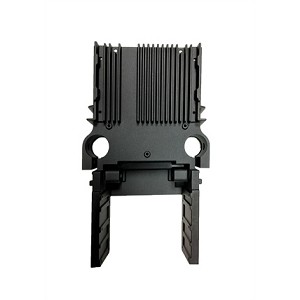

Laser trimming also provides high precision. The laser beam can be precisely controlled to cut through the excess material with minimal heat - affected zone, resulting in clean and accurate cuts. However, laser trimming is generally more expensive than mechanical trimming and may require specialized equipment and trained operators.
Waterjet Trimming
Waterjet trimming is another option. It uses a high - pressure stream of water mixed with abrasive particles to cut through the excess material. Waterjet trimming is a versatile method that can be used for a wide range of materials and shapes. It is also a relatively clean process, as there is no heat generated during the cutting process, which reduces the risk of thermal distortion of the part.
However, waterjet trimming may be slower than mechanical or laser trimming, and it requires a proper wastewater management system to handle the used water and abrasive particles.
Importance of the Trimming Process
The trimming process is of utmost importance in the die cast molding process for several reasons.
Quality Assurance
One of the primary reasons for trimming is to ensure the quality of the final product. By removing the excess material, the part's dimensions are brought within the specified tolerances. This is crucial for parts that need to fit precisely into assemblies or work in conjunction with other components. A well - trimmed part also has a smooth surface finish, which enhances its appearance and can improve its corrosion resistance.
Functionality
The excess material on a die - cast part can interfere with its functionality. For example, flash or burrs on a part may prevent it from sliding smoothly in a mechanism or cause jamming. By trimming the part, we ensure that it operates as intended and meets the performance requirements of the end - user.
Cost - Efficiency
Although the trimming process adds an additional step to the manufacturing process, it can actually be cost - effective in the long run. By removing the excess material early in the production process, we reduce the amount of material that needs to be processed further. This can save on machining time and costs, as well as reduce waste.
Trimming and Die Cast Mold Parts
The trimming process is closely related to the quality of the die cast mold parts. A well - designed die can minimize the amount of flash and excess material produced during the casting process, which in turn simplifies the trimming process. You can find more information about Die Casting Mold Parts on our website.
The die must be properly maintained to ensure consistent quality of the die - cast parts. Any wear or damage to the die can result in increased flash or other defects, making the trimming process more challenging. Regular inspection and maintenance of the die can help prevent these issues and ensure a smooth trimming process.
Precision Die Casting Mold Processing and Trimming
Precision in die casting mold processing is essential for a successful trimming process. Precision Die Casting Mold Processing ensures that the die is manufactured to exact specifications. A precise die will have well - defined cavities, runners, and gates, which will result in more consistent die - cast parts with less excess material.
During the precision die casting mold processing, factors such as the design of the die, the choice of materials, and the machining techniques used all play a role in determining the quality of the final die - cast part and the ease of the trimming process. For example, a well - designed gate can ensure proper flow of the molten metal and reduce the formation of flash.
Conclusion
The trimming process is an integral part of the die cast molding process. It is the step that transforms the raw die - cast part into a finished product that meets the required quality, functionality, and appearance standards. Whether using mechanical, laser, or waterjet trimming methods, the goal is to remove the excess material efficiently and accurately.
As a die cast molding process supplier, we understand the importance of the trimming process and have the expertise and equipment to ensure that it is carried out to the highest standards. Our commitment to precision die casting mold processing and quality control allows us to provide our customers with high - quality die - cast parts.
If you are in need of die - cast parts or have any questions about the die cast molding process, including the trimming process, we encourage you to contact us for a procurement discussion. Our team of experts is ready to assist you in finding the best solutions for your specific needs.
References
- ASM Handbook, Volume 15: Casting, ASM International
- Die Casting Engineering Handbook, Society of Die Casting Engineers
- Metal Casting: Processes and Quality Control, McGraw - Hill Education